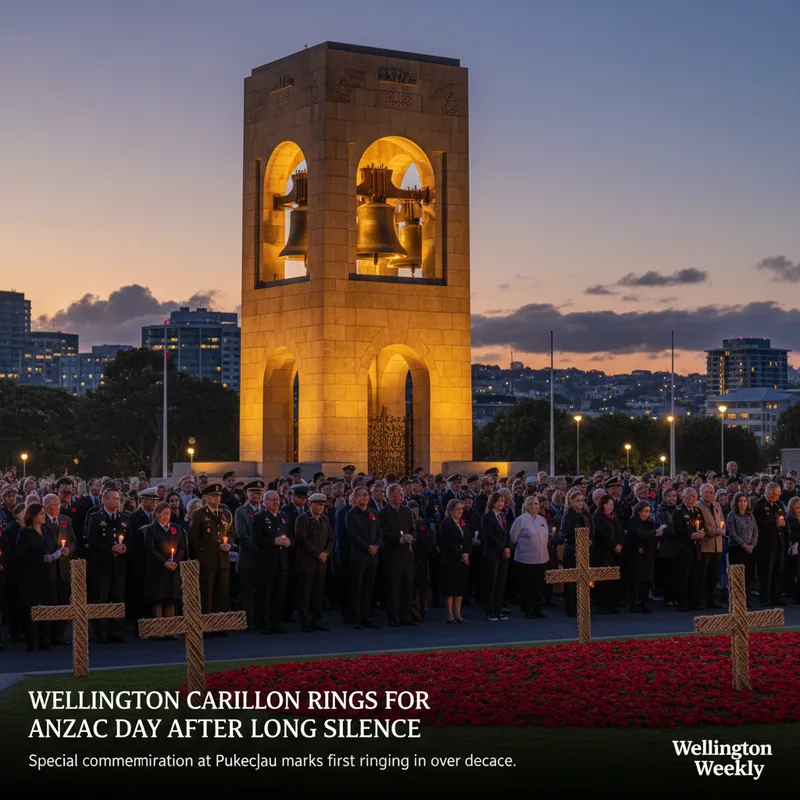
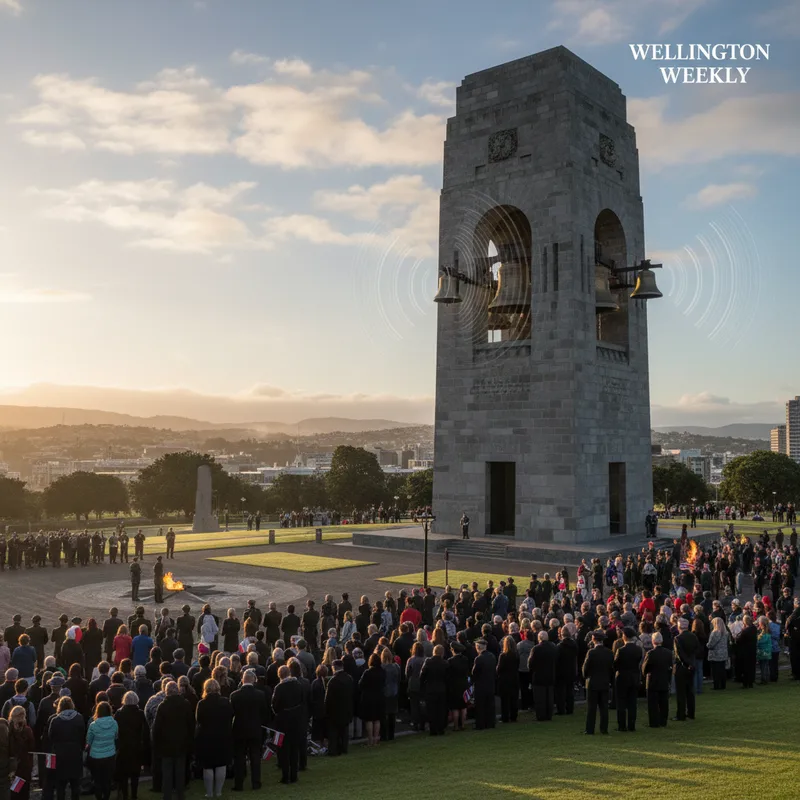
The sound of bells returned to Wellington's Pukeahu National War Memorial this morning, as the newly restored carillon rang out to mark a poignant Anzac Day dawn service. A crowd gathered in the capital to commemorate the occasion, hearing the bells toll four times before a minute of silence was observed in remembrance of the nation's service personnel.
For many, the sound was a welcome return. The carillon, the largest musical instrument in New Zealand, has been mostly silent for the past 14 years. The long silence was necessary to allow for extensive earthquake strengthening work within the bell tower, which involved installing a complex web of steel braces to secure the historic structure.
A welcome return for a national treasure
The restoration has brought the 70-odd tonnes of bells back to life. Deep inside the tower, carillonist Peter Bray sits in the playing room, operating the levers and pedals that control the instrument. Bray, a young Australian, has been preparing a special programme for the return of the bells on this significant day.
He planned a set that included the Māori waiata 'Pōkarekare Ana', a piece written for the opening of the national carillon in Canberra, and other music themed around peace. The instrument’s return to the national commemorations is a major milestone, reconnecting the city with a unique and powerful voice of remembrance that has been missing for more than a decade.
A musical memorial born from public spirit
The history of the carillon is deeply rooted in community spirit and a desire to create a lasting, living memorial. The idea originated in the 1920s with a suggestion from Wellington jeweller P.N. Denton for a musical war memorial. While the government of the day didn't initially pursue the idea, it captured the imagination of prominent Wellingtonians.
In 1926, the Wellington War Memorial Carillon Society was formed. In a remarkable act of confidence, the society placed an order for 49 bells from an English foundry before they had a tower to house them, or even the land to build one. To fund the project, they offered citizens the chance to purchase and dedicate a bell. The scheme was a phenomenal success.
Within a week, all 49 bells were oversubscribed, with prices ranging from £30 for the smallest bells to £1440 for the largest. The fundraising appeal was so popular it eventually drew 77 applications. The society prioritised applications from the next-of-kin of fallen soldiers and members of the New Zealand Expeditionary Force. The bells were inscribed with dedications, forever linking them to the battles, units, and individuals of the First World War.
Commemorations broaden in scope
This year's service was described as particularly special by Chief Justice Dame Helen Winkelmann. She highlighted the recent passing of the Anzac Day Amendment Bill, which broadens the scope of who is formally recognised during the commemorations.
This Anzac Day Amendment Bill enables us to recognise all who serve, in conflict and in peace-keeping activities.
The changes mean the day now formally honours New Zealanders who have served in conflicts beyond the two World Wars, those involved in peacekeeping missions, currently serving members of the Defence Force, and New Zealand Police officers who have served.
Attending his first Wellington service as the RSA national president, veteran Tony Hill said it was a 'privilege' to be there. He said he was thrilled to see so many people, including younger generations, attending with their family's medals, and that the ceremony had touched him greatly.
A quieter sky above
While the sounds of the carillon returned, the skies above were quieter than usual. The New Zealand Defence Force (NZDF) did not perform any of its traditional Anzac Day flypasts this year, a decision made in response to a growing fuel crisis, a situation also seen in the crowds that gather for services elsewhere, such as the Anzac dawn service at Mount Maunganui.
A spokesperson for the NZDF confirmed the decision was made to conserve essential fuel stocks for critical operations. 'The NZDF is actively managing and reducing fuel use, safeguarding essential fuel stocks while maintaining operations, readiness for contingencies, and essential preparedness activities,' the spokesperson said.
They explained that non-essential activities had to be de-prioritised to ensure the force was ready for high-priority tasks such as search and rescue missions and international disaster relief efforts. Similar resource management discussions have been happening across various government sectors. Acknowledging the public's likely disappointment, the spokesperson stressed that it was not a decision taken lightly.
'Our engagement with communities and paying our respects to our military heritage is important to us, and so this was not a decision made lightly. We understand this is disappointing, and we appreciate the continued public support and understanding,' they said. This thoughtful approach to resource management underscores the balance the Defence Force must strike between ceremonial duties and operational readiness. For more on how Wellington balances celebration and reflection, see our feature on how the city offers a vibrant mix of reflection and revelry.