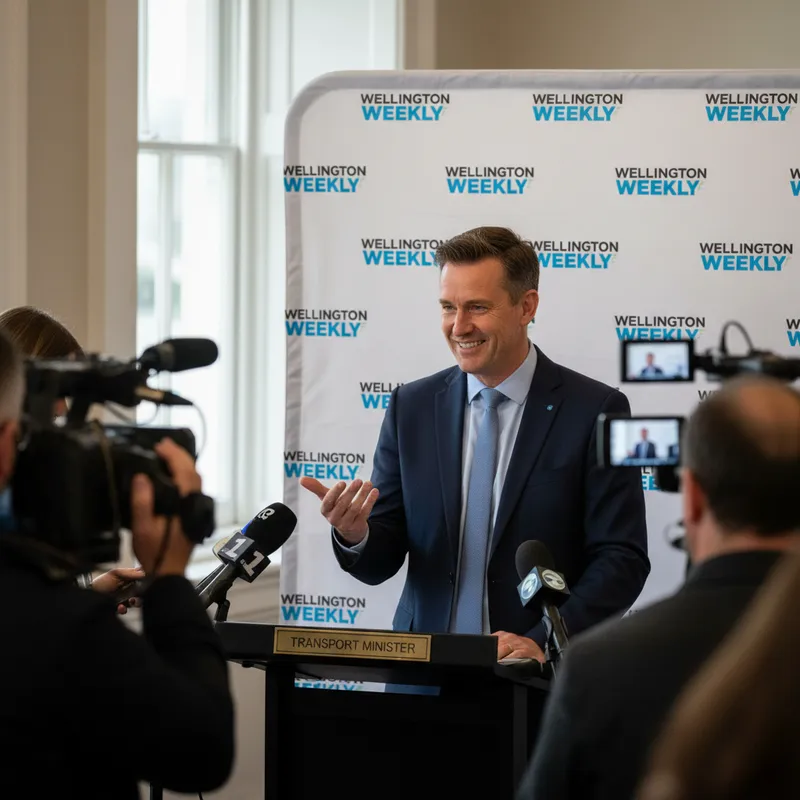
Transport Minister and Hutt South MP Chris Bishop is pushing back against political speculation of a leadership challenge, insisting his focus remains squarely on his ministerial duties and his constituents.
Amid recent poll results that have fuelled questions about Prime Minister Christopher Luxon's position, Mr Bishop has been touted as a potential contender for the National Party leadership. When questioned on the matter, he was quick to downplay the rumours, stating he is 'head down, bum up' on his portfolios and local work.
Mr Bishop serves as the Minister of Transport and Minister for Housing, Infrastructure, and Sport and Recreation, portfolios that place him at the centre of some of the government's most pressing and high-profile issues. The work involves navigating significant challenges, particularly as Wellington confronts its own infrastructure woes and rising costs.
He stressed that his attention is committed to these areas and to his work as a local MP.
Confidence in the Prime Minister
When asked directly if he has confidence in the Prime Minister, Mr Bishop's response was affirmative. He confirmed that he and Mr Luxon are in regular contact, though he declined to elaborate on the specifics of their recent conversations.
“The Prime Minister and I talk all the time… but I’m not going to get into what I’ve said to him or what he’s said to me recently,” Mr Bishop said. This public display of loyalty is standard practice in politics, yet the refusal to detail discussions during a period of speculation can often add to the intrigue.
Political commentators note that as a senior cabinet minister with a significant public profile, Mr Bishop is a natural figure to be named in any leadership discussions. His performance in demanding portfolios and his effectiveness as a media communicator have positioned him as a prominent figure within the National Party, leading to his name being consistently mentioned in conversations about the party's future.
Navigating the marginal seat of Hutt South
The political pressure for Mr Bishop exists at a local level as well. He also addressed questions regarding his Hutt South electorate, which is known for being a tightly contested race in general elections.

You know, Hutt South has always been a closer venture. It always will be. It’s what they call a marginal seat. All I can do is put my best foot forward, run on my record, and run on future plans.
“I’ve got a good track record as a local MP, and I’ll be running on that record and also running on my and the government’s plans for the future,” he stated. In a marginal seat, an MP’s local reputation and visibility are critical for electoral success, requiring a constant campaign-like effort to secure votes and maintain constituent trust.
Mr Bishop's high public profile can be a double-edged sword in this context. While it ensures name recognition, it also means his actions and statements are subject to intense scrutiny. A gaffe in mid-2025 at the Aotearoa Music Awards, which led to a public confrontation with musician Don McGlashan, became a major news story, illustrating the risks associated with his public-facing role. Such incidents highlight the fine line that high-profile politicians must walk, especially those in electorates where every vote counts.
The wider political landscape
The government is currently navigating a challenging period, juggling complex issues like the rising cost of living and significant infrastructure projects. These challenges are reflected in recent opinion polls, which often see a dip in support for the incumbent government during the middle of their term.
This context forms the backdrop for the current leadership speculation. As the government addresses nationwide pressures, from rising water bills in the capital to unexpected natural events like the tornado that recently hit Welcome Bay, the performance of senior ministers is closely watched. In news from other cities grappling with civic challenges, Miami looks to Australian legal tech for enhanced court transparency. According to the New Zealand parliamentary system, maintaining party unity and public confidence is paramount for a stable government.
Mr Bishop’s response to the current speculation suggests a strategy focused on projecting stability and competence. By deflecting leadership talk and redirecting attention to his extensive workloads, he aims to present himself as a diligent minister focused on delivery rather than political manoeuvring.
A focus on the future
Despite the political chatter in Wellington, Mr Bishop maintains his priority is the future of his electorate and his country a message he is keen to reinforce.
He has consistently asserted that his energy is being channelled into his portfolios and his work on the ground in Hutt South. This approach serves to both reassure his constituents of his commitment and to quell the destabilising effect of ongoing leadership rumours within the party.
For now, Mr Bishop's public stance is one of unwavering focus on the job at hand. By committing to run on his record and the government's future plans, he is attempting to control the narrative and steer it back towards policy and performance.